



The current market is in an interesting spot, making it difficult for candidates to find jobs, advance their careers, and understand the skills needed to make it in software engineering. On top of the market conditions, AI is fundamentally changing what it means to be a software engineer, further confusing the process.
This guide is designed to be simple and focus on what I see most engineers misunderstand or get wrong about the current market and applying for jobs. It:
Summarizes the current state of the market using the numbers and metrics that are important to understand.
Explains the in-demand AI skills necessary to succeed as a software engineer.
Details what those numbers actually mean for you.
Goes through the most difficult part of the application process: Fitting a resume.
Additionally, I’ve now created a technical resume checklist for all paid subscribers. This stems from reading a lot of resumes from incredibly qualified candidates that are immediately rejected, simply because their resume doesn’t sell them very well. There are many very simple tweaks you can make to your resume that will greatly increase your chances of getting noticed by hiring managers.
Q3 2026 by the numbers
First, let’s discuss the important metrics you should understand:
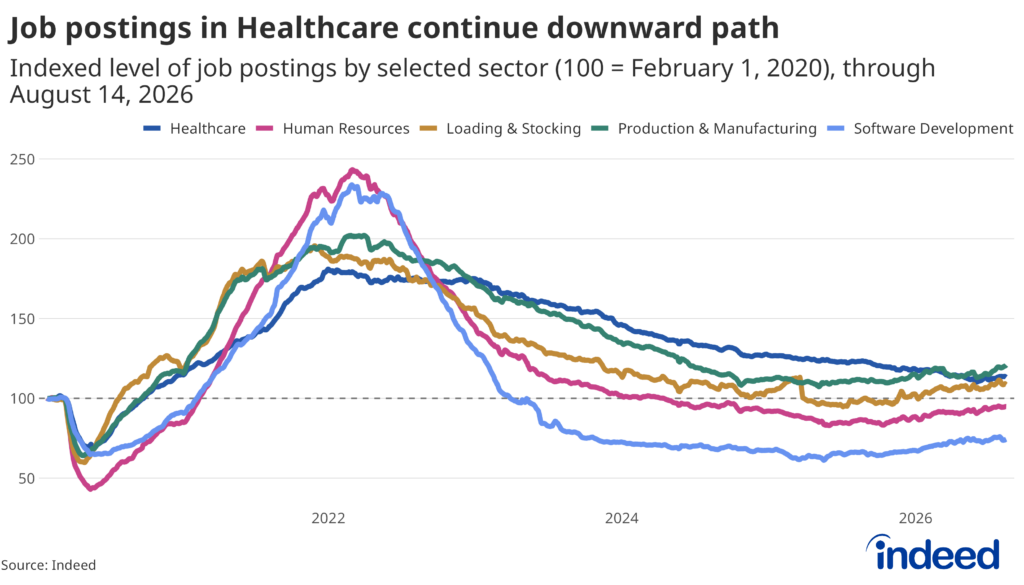
Software openings are increasing but remain below pre-pandemic levels. U.S. software development postings on Indeed were 25.6% below February 2020 levels in August 2026, despite improving from their May 2025 low.
Overall hiring is trending downward. LinkedIn’s U.S. hiring rate was 7.6% lower in July 2026 than in July 2025.
Applications per opening have more than doubled. Greenhouse reports an increase to 244 applications per job in 2025, more than twice the 2022 level, among its North American customers across industries.
Most software engineering hiring happens outside tech companies. Technology companies accounted for 35% of U.S. software engineering hires recorded by LinkedIn between 2021 and 2025.
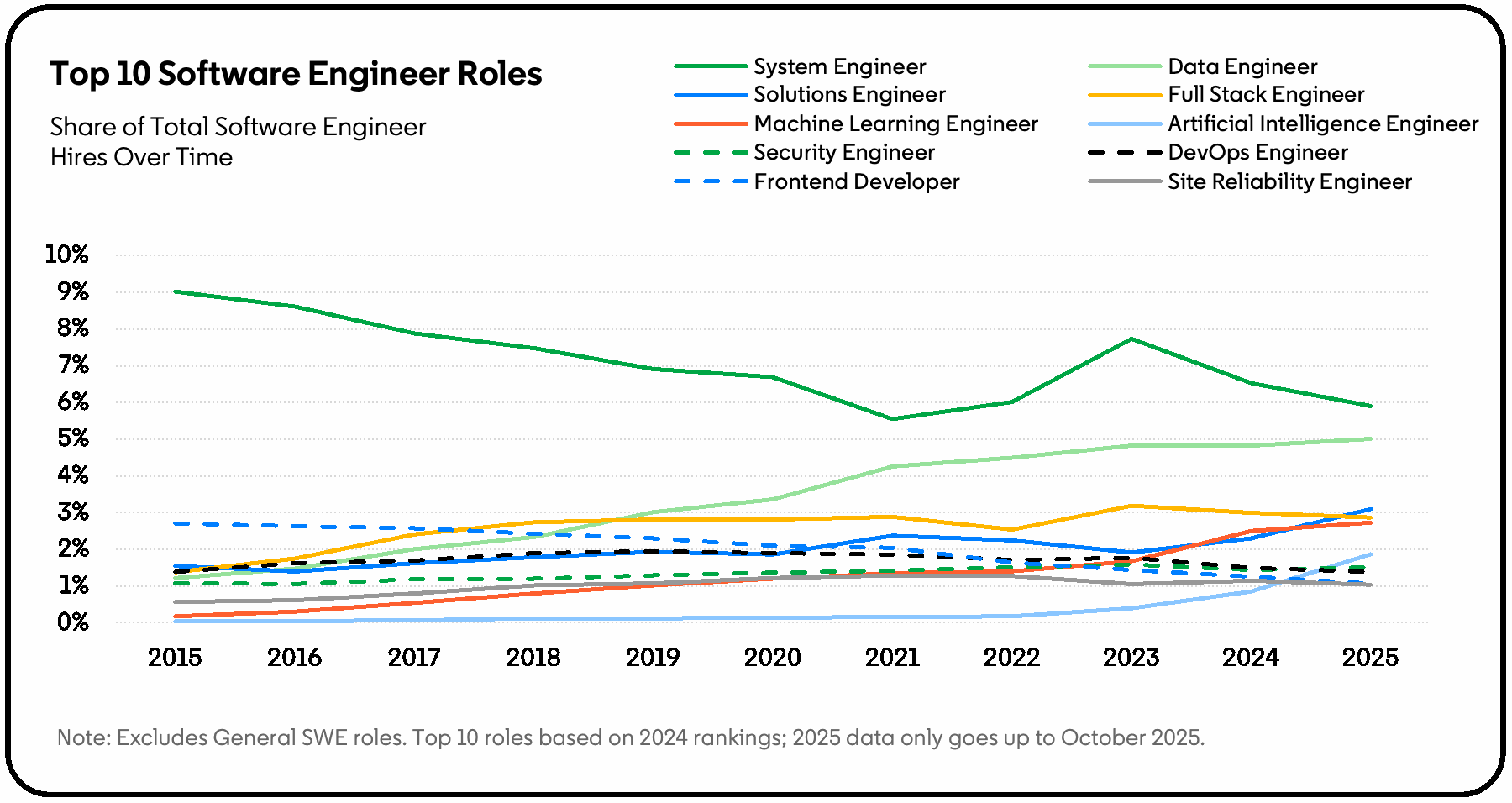
AI and ML engineering roles account for a growing share of software hiring. In LinkedIn’s U.S. data, AI engineers’ share of software engineering hires grew roughly 14-fold from 2019 to 2025, while ML engineers’ share roughly doubled. The 2025 chart data runs through October.
Remote options have become less common at startups. In Ashby’s global sample of venture-backed startups with up to 300 employees, the share of jobs offering remote options fell from roughly 80% in 2023 to 60% in 2025—a decline of about 20 percentage points. Anecdotally, I’m surprised it’s this high as I see very few remote job opportunities in general.
Remote roles attract more applications. Ashby’s February 2026 startup report reports roughly 42% more inbound applications per hire for remote roles than for in-office roles in its global sample of venture-backed startups with up to 300 employees.
Only a very small share of applications reach an interview. In Ashby’s customer data, 3.6% of applications for technical roles reached the interview stage in the first quarter of 2026.
Successful technical hiring processes take weeks and several interviews. Ashby reports roughly 48 days from application to accepted offer and about five interview sessions per hired technical candidate, on average.
Direct applications still account for most hires. Inbound applicants accounted for 52% of hires in Q1 2026 in Ashby’s customer sample, across roles.
If you’re interested in readings the full reports, check out:
The AI skills and roles most in demand
I continuously track the job market for AI-related engineering roles at top companies. This is one of the best ways to know who’s hiring, what skills are in demand, and what roles are being hired for. Here’s a brief summary of my recent findings:
